Description
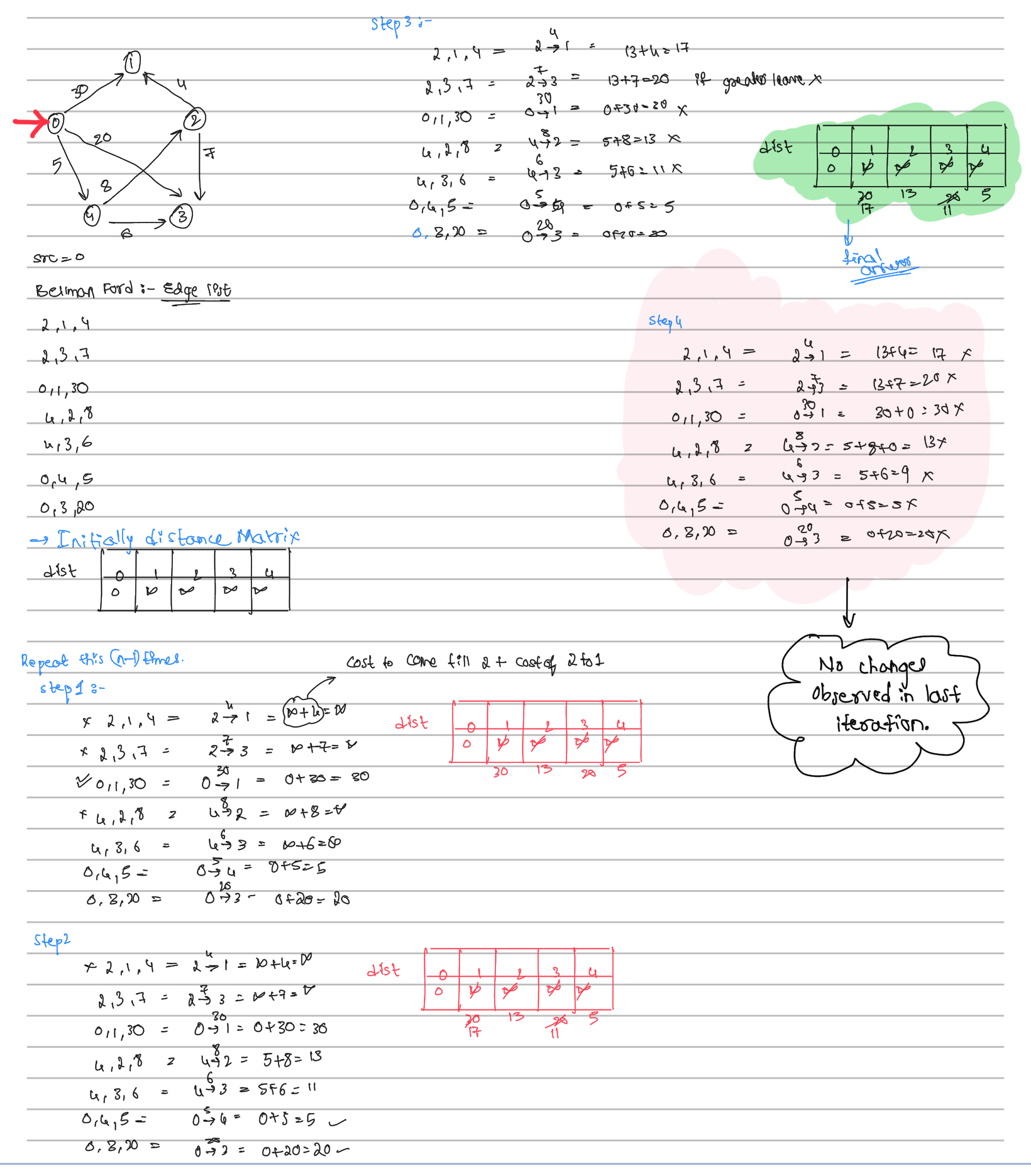
Bellman-Ford is a graph-based shortest path algorithm used to find the minimum cost paths from a single source to all other vertices, even in the presence of negative edge weights. In OpenStack networking, it can be used in SDN environments to compute paths with various metrics such as bandwidth, delay, or cost.
Unlike Dijkstra’s algorithm, Bellman-Ford handles negative weight edges and is more resilient in dynamic environments where such metrics may vary or degrade.
Key Features
- Handles Negative Weights: Suitable for environments with fluctuating or negative metrics.
- Flexible Routing: Works well in routing protocols with dynamic link cost adjustments.
- Resilient: Can detect negative weight cycles, useful for anomaly detection in the network.
Use Case
Bellman-Ford is particularly suitable in OpenStack networks integrated with distance-vector routing protocols like RIP. It ensures:
- Efficient packet delivery even with negative metric values.
- Detection of routing loops and anomalies through negative cycle detection.
- Effective routing in multi-tenant virtualized environments with dynamic metrics.
Implementation
Below is the implimentation of leetcode solution for the Network Time Delay (Leetcode 743).
Bellman-Ford Implementation in JavaReferences
- GeeksForGeeks: https://www.geeksforgeeks.org/bellman-ford-algorithm-dp-23/
- Wikipedia: https://en.wikipedia.org/wiki/Bellman%E2%80%93Ford_algorithm