Counting Sort
Counting Sort is a non-comparison-based sorting algorithm that works by counting the number of occurrences of each distinct element in the input, storing those counts in an auxiliary array, and then calculating positions to place each element in the sorted output. It runs in O(n + k) time, where k is the range of input values, making it extremely fast when the range is small compared to n. In the Android OS, it can be useful in scenarios like sorting process priorities, sensor event timestamps within bounded ranges, or color values in image processing, where the possible values are limited and known in advance. Unlike comparison-based algorithms such as QuickSort or MergeSort (which have O(n log n) lower bounds), Counting Sort leverages direct indexing rather than element comparisons, allowing linear-time sorting for bounded integer ranges. It is preferred when data size is large but value range is small and integers-based, and stability is required for preserving order of equal elements.
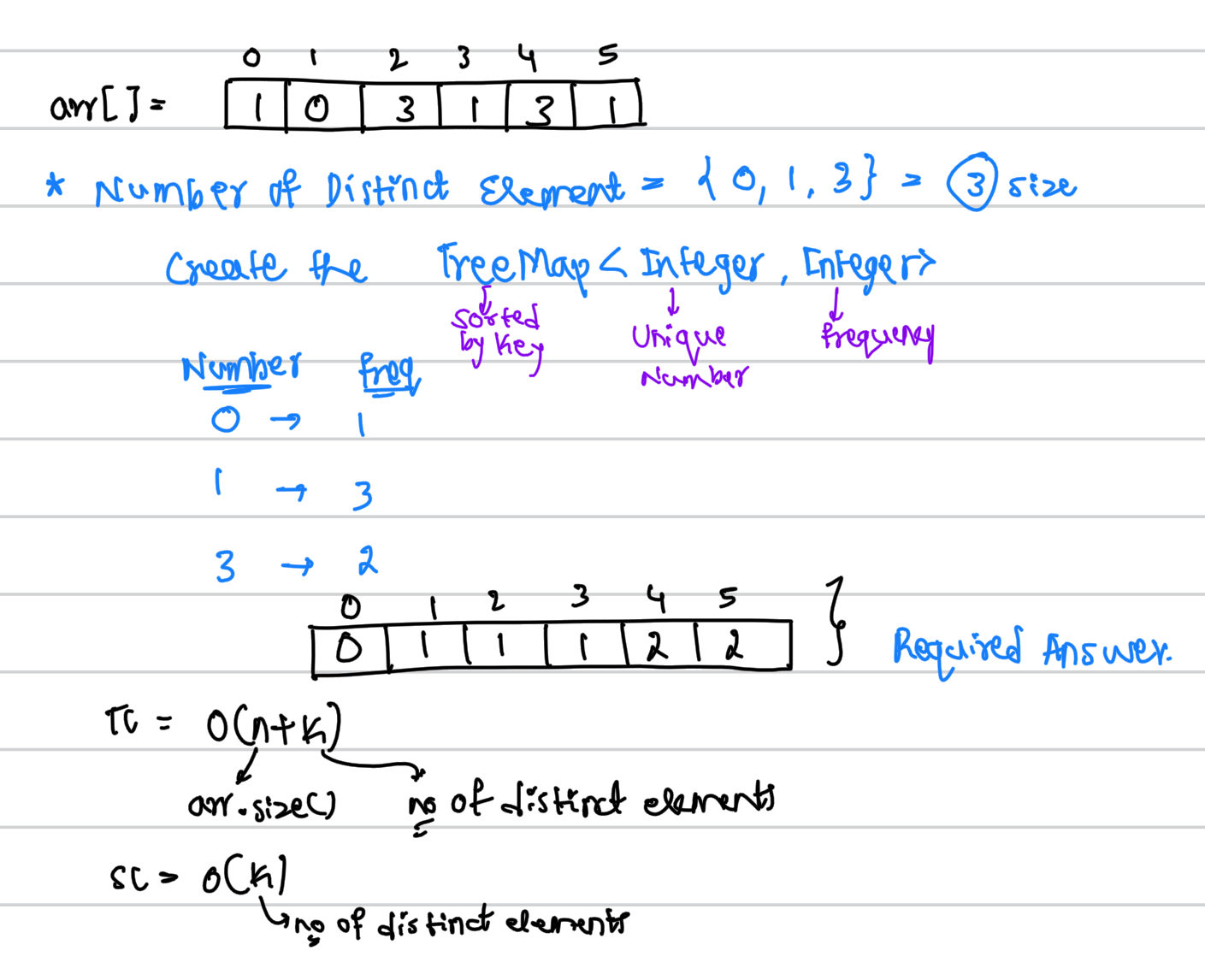
It's like counting how many people got each score in a test and then arranging them in order.